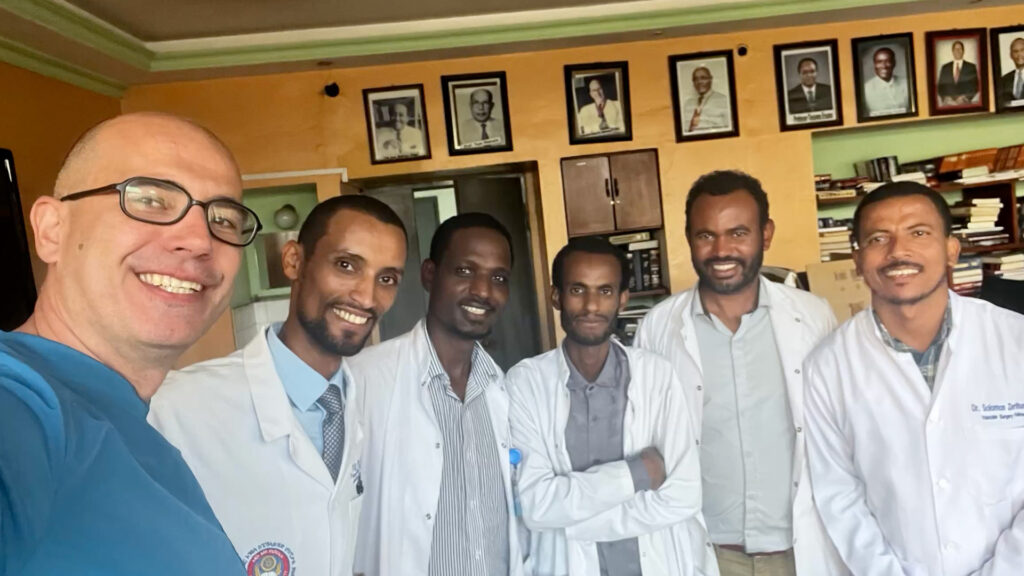
We are sharing the words of Prof. Dr. Končar:
The volunteer professional mission at Tikur Anbessa University Hospital, Black Lion Hospital, in Addis Ababa was a unique professional and human experience, aimed at education, knowledge exchange and the advancement of vascular surgery in a resource-limited environment. I joined the mission at the invitation of the local vascular team and within the framework of international cooperation supported by the European Society for Vascular Surgery (ESVS), with the idea of contributing to the further development of vascular services in Ethiopia through joint work, surgery and education. In addition to the professional contribution, the mission also aimed to foster mutual learning, a better understanding of different healthcare systems and the strengthening of international professional ties.
Tikur Anbessa is the largest university hospital in Ethiopia and a referral centre for the most complex vascular, cardiac surgery and thoracic patients from across the country. The local team consists of highly motivated and dedicated physicians who work every day in very demanding conditions, often with limited access to basic materials and equipment. Nevertheless, their level of expertise, desire to learn and readiness to adopt new techniques left a strong impression.
During two weeks of joint work, we performed eight open vascular procedures, including juxtarenal abdominal aortic aneurysms, acute aortic thromboses, explantation of previous grafts and ruptured carotid aneurysms. Since the local team independently manages routine cases, all the patients we operated on represented their most difficult and complex cases.
A particularly important aspect of this mission was education. Each surgical procedure was an opportunity for a detailed exchange of experience regarding surgical techniques, methods of performing anastomoses, organisation of the vascular team, use of cell saver technology and current recommendations for the treatment of complex aortic diseases. I also delivered professional lectures on the organisation of an aortic centre, improving treatment outcomes and the importance of continuous education. We also organised a practical workshop with simulation models for practising open aortic procedures, which generated great interest among young surgeons and residents.
My stay in Ethiopia also gave me a better understanding of the challenges faced by doctors in healthcare systems with limited resources. Young patients with advanced vascular diseases, limited availability of grafts, catheters and basic consumables, as well as the need to make quick decisions in complex situations, further emphasise the importance of experience, teamwork and adaptability. It is precisely in such an environment that the importance of international cooperation, education and continuous knowledge exchange for the development of modern vascular surgery becomes clear.
In addition to the professional work, the mission also had a strong human dimension. Collaboration with colleagues from different countries, getting to know Ethiopian culture, daily contact with the local community and a shared sense of purpose all left a deep impression. Experiences like this remind us that medicine goes beyond the borders of countries and healthcare systems, and that dedication to the patient, the desire to learn and mutual support are universal values. I returned from Ethiopia professionally enriched, with new friendships, additional experience in complex open aortic surgery and even greater motivation to continue developing education and international cooperation in vascular surgery.
Video report: